
Full Home Renovation in Lakeview, Chicago
A residential design-build transformation integrating custom cabinetry, layered furnishings, and refined material selections throughout the home.
Quick Project Facts
Location: Lakeview, Chicago (60657)
Scope: Full home renovation and furnishing
Services: Interior design, residential remodeling, furnishings, project management
Spaces: Kitchen, butler’s pantry, dining room, living room, family room, bedrooms, powder room
Style: Transitional with modern detailing
Project Overview
Lugbill Designs led both design and construction across all spaces in this home that is two blocks from the iconic Chicago Music Exchange and neighborhood favorite, Wieboldt (William) Park. LD guided selections for materials, finishes, lighting, wall coverings, furnishings, and layout decisions.
The objective was to create a home that reads as unified from room to room. A restrained palette of soft neutrals, warm wood, stone, and layered textiles carries throughout, with contrast introduced through black hardware, brass accents, and moments of pattern.
Each space supports a different function—cooking, gathering, entertaining, or rest—but all are tied together. The result is a home that feels holistic, not pieced together.
What this project addressed
Creating consistency across multiple rooms
The renovation aligns finishes, materials, detailing, and furnishings so the home reads as one connected interior rather than a sequence of unrelated rooms.
Using cabinetry and millwork to introduce structure
Kitchen cabinetry, butler’s pantry storage, shelving, and built-in elements help define individual spaces while maintaining continuity across the full home.
Balancing variation with repetition
Wood tones, soft neutrals, stone surfaces, black hardware, brass accents, textiles, and wall treatments repeat across rooms, while shifts in scale and use give each space its own role.
Integrating furnishings into the renovation scope
Furniture, rugs, window treatments, artwork, mirrors, lighting, and accessories were planned alongside the renovation so proportion, layout, and finish decisions work together.
Improving flow between kitchen, dining, and living spaces
The kitchen, butler’s pantry, dining room, living room, and family room were treated as connected spaces that support cooking, gathering, entertaining, and daily use.
Adding function without visual clutter
Storage, media elements, window treatments, and styling details are incorporated to support everyday use while keeping the visual lines clean and cohesive.
Giving high-impact smaller spaces their own identity
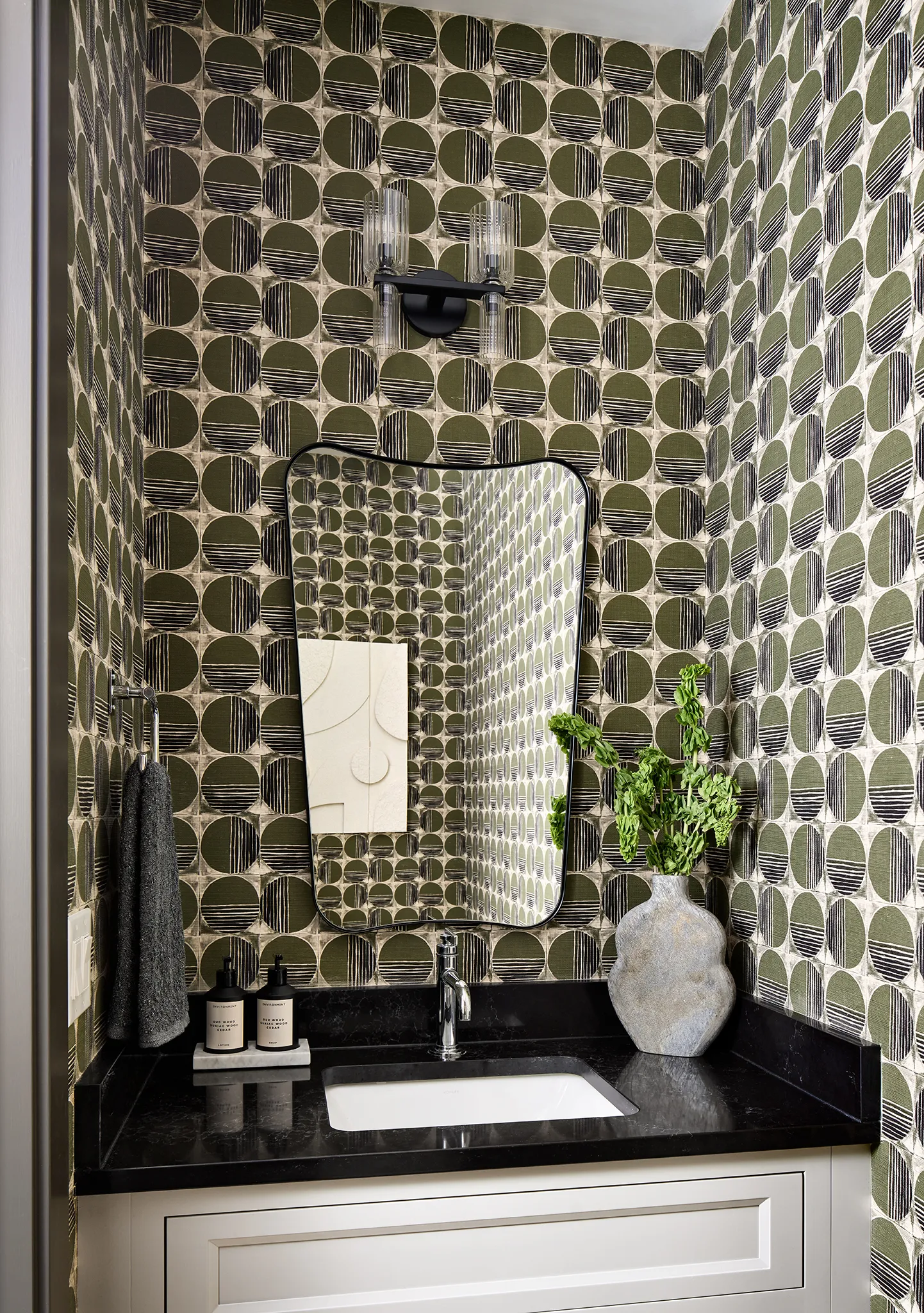
The powder room introduces stronger pattern, contrast, and texture while staying connected to the broader material palette.
A Thoughtful Residential Transformation
The original home lacked continuity between rooms, with mismatched finishes and limited cohesion. The redesign focused on aligning materials, improving flow, and introducing structure through millwork, cabinetry, and architectural detailing.
Rather than relying on statement pieces alone, the transformation is built through repetition and balance. Wood tones reappear across cabinetry, furniture, and shelving. Black accents show up in hardware and drapery systems. Softer elements—upholstery, rugs, and window treatments—temper the harder finishes.
This approach creates a home that feels composed without being rigid, and layered without excess.
Design Details by Space
Kitchen Design & Remodeling
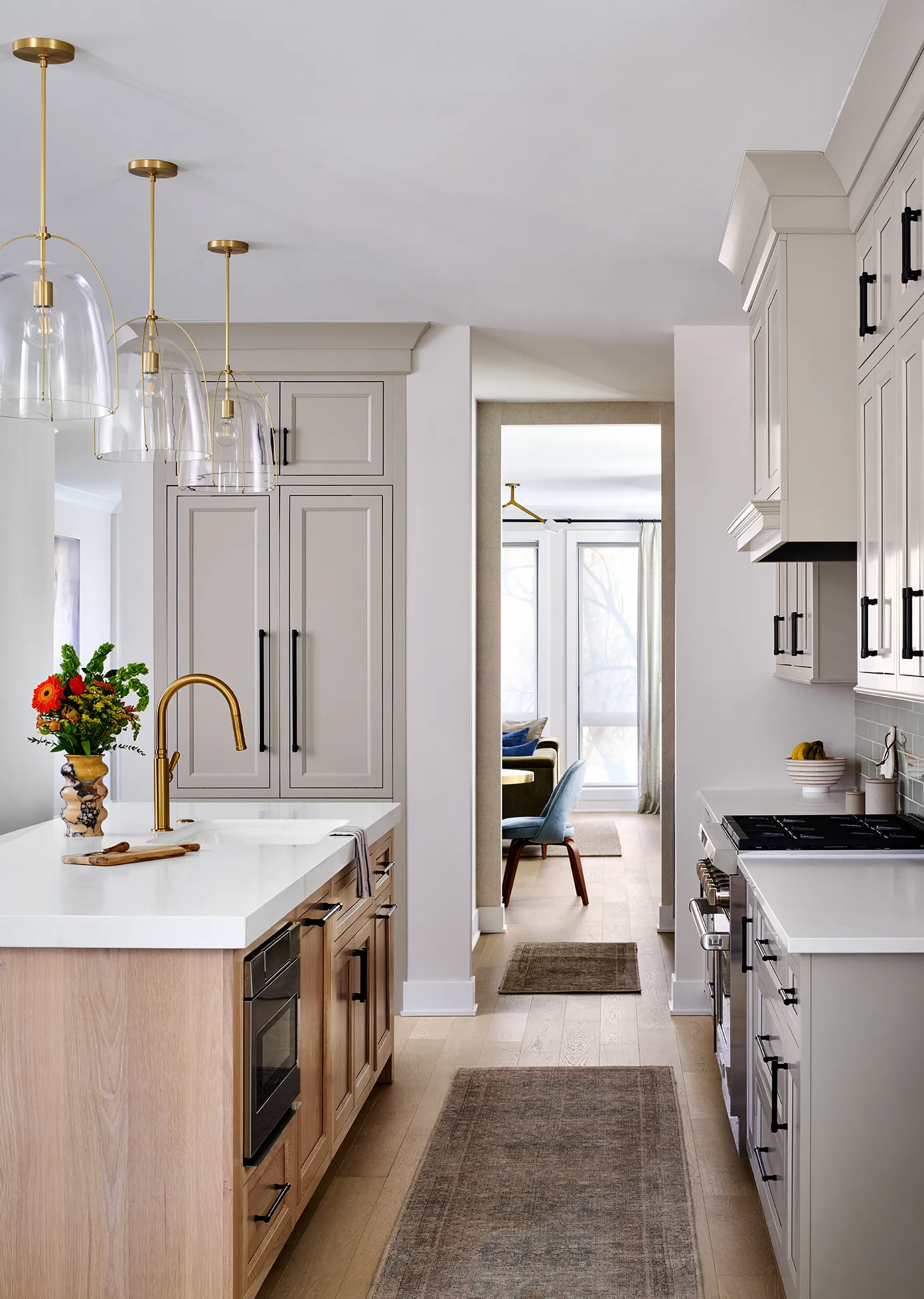
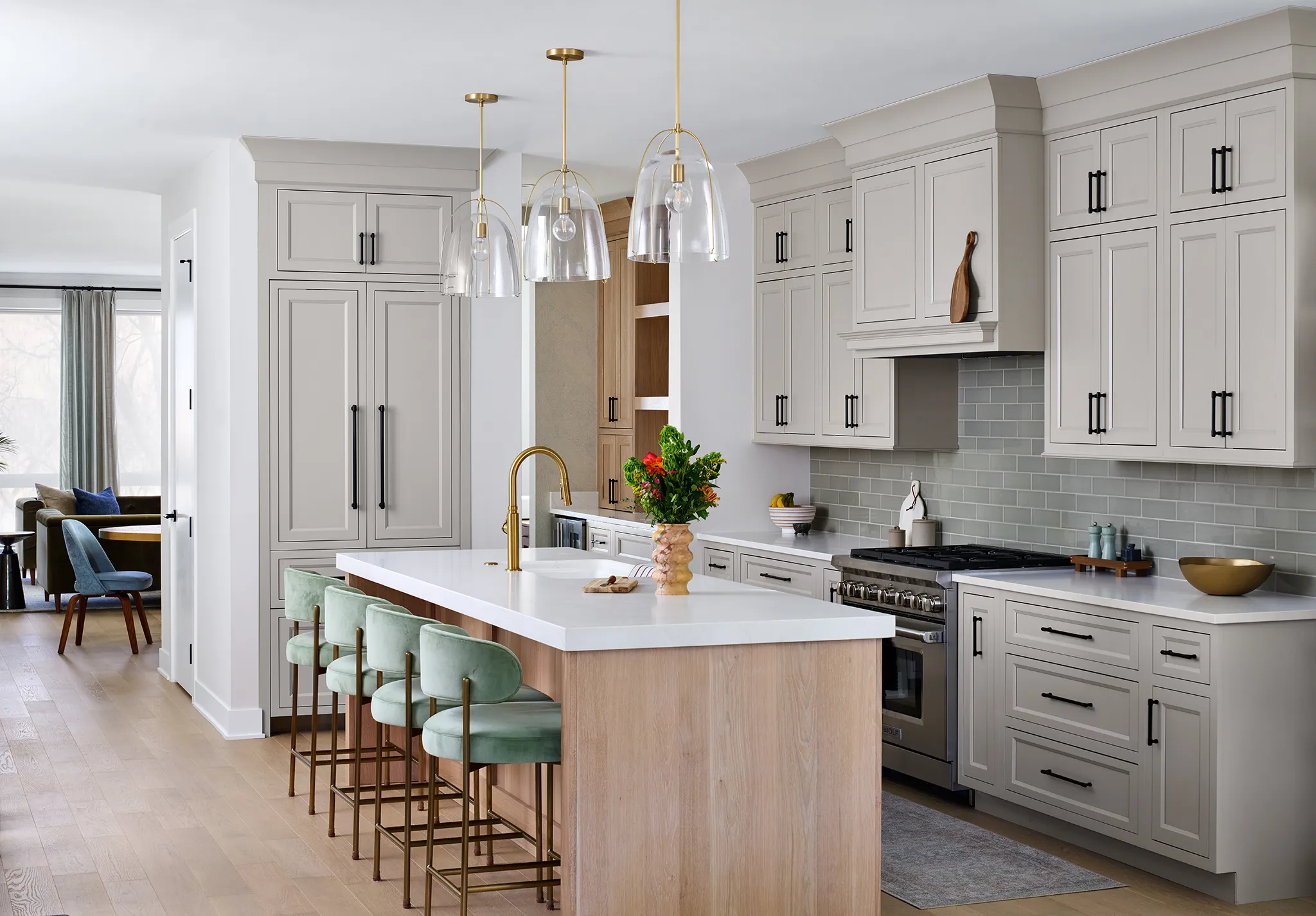
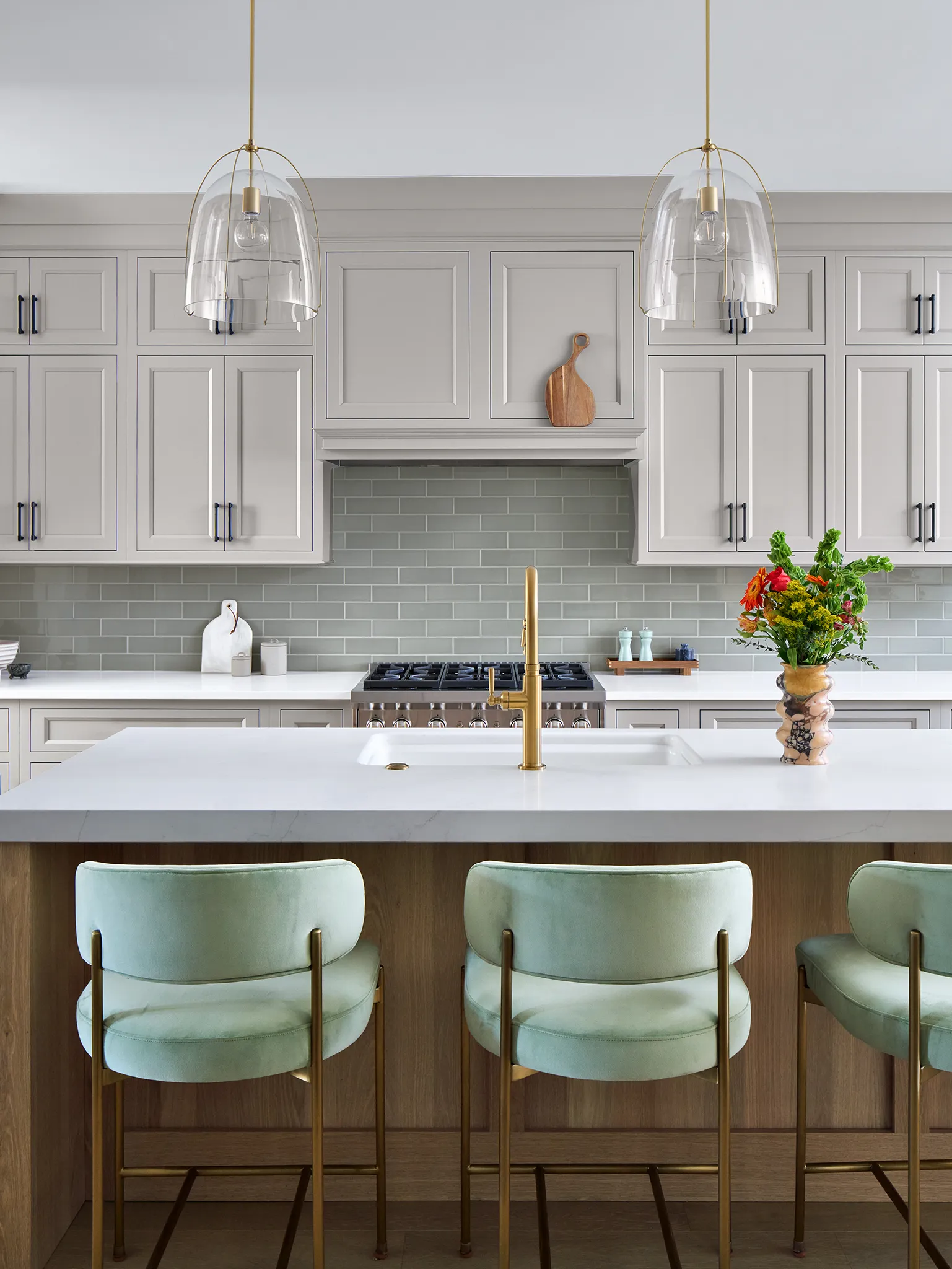
This Chicago kitchen remodel is organized around a central island designed for both daily use and entertaining. Perimeter cabinetry uses a refined inset construction with a restrained color palette, paired with darker hardware to define each element.
The island introduces a warmer wood tone, breaking up the cabinetry while anchoring the space. A waterfall-edge countertop adds a dynamic element, while upholstered seating softens the overall look.
Lighting and plumbing fixtures introduce a secondary material layer, adding warmth without overwhelming the palette. The backsplash and surrounding finishes were selected to remain quiet, allowing the cabinetry and island to lead visually.
Butler’s Pantry
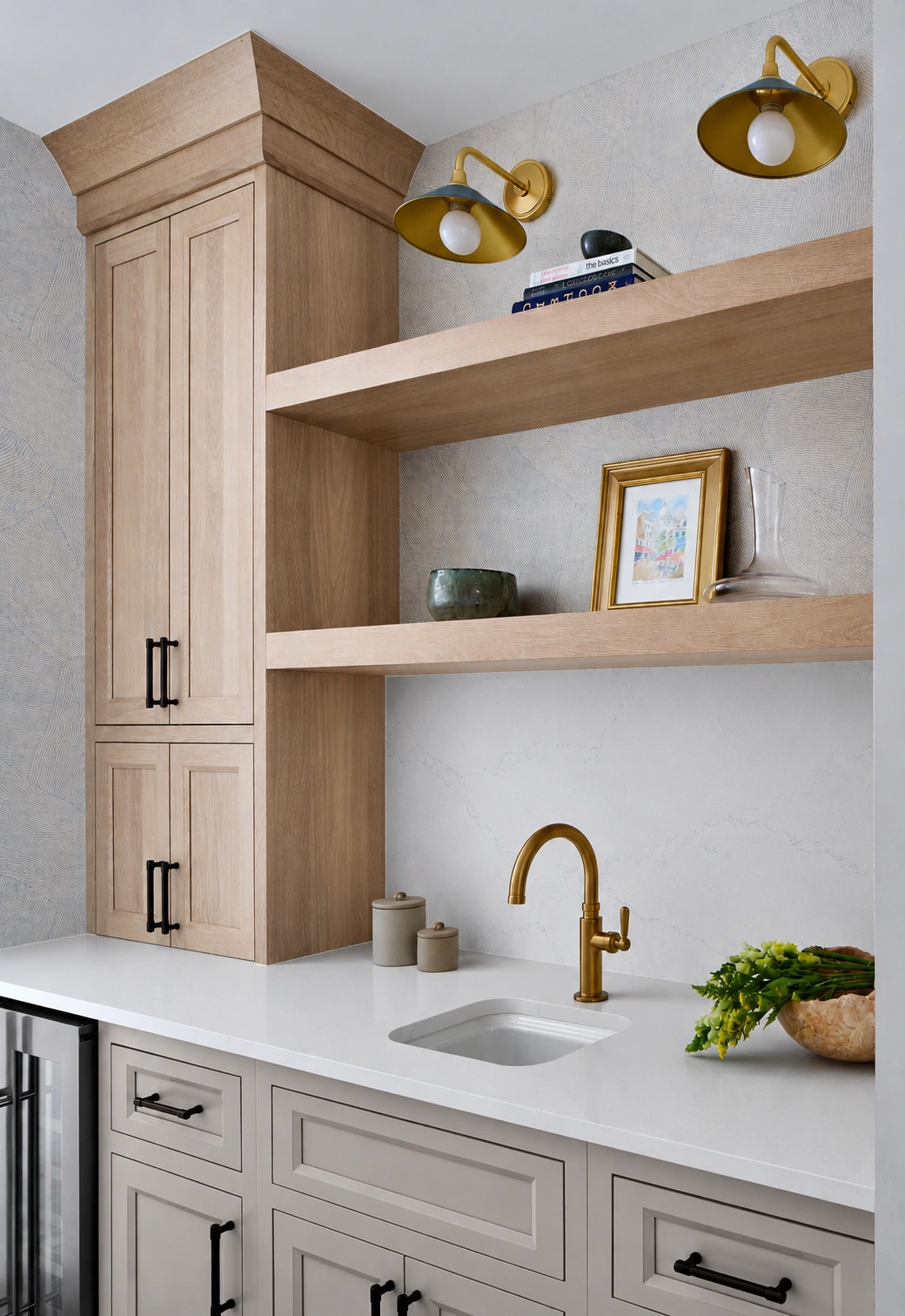
The butler’s pantry extends the kitchen’s functionality while introducing a more layered material mix. Lower cabinetry provides concealed storage, while open shelving in a contrasting wood tone allows for display.
Wall treatments and lighting bring added depth, giving the space presence despite its smaller footprint. The palette stays aligned with the kitchen, but the added texture and contrast make it distinct.
Dining Room
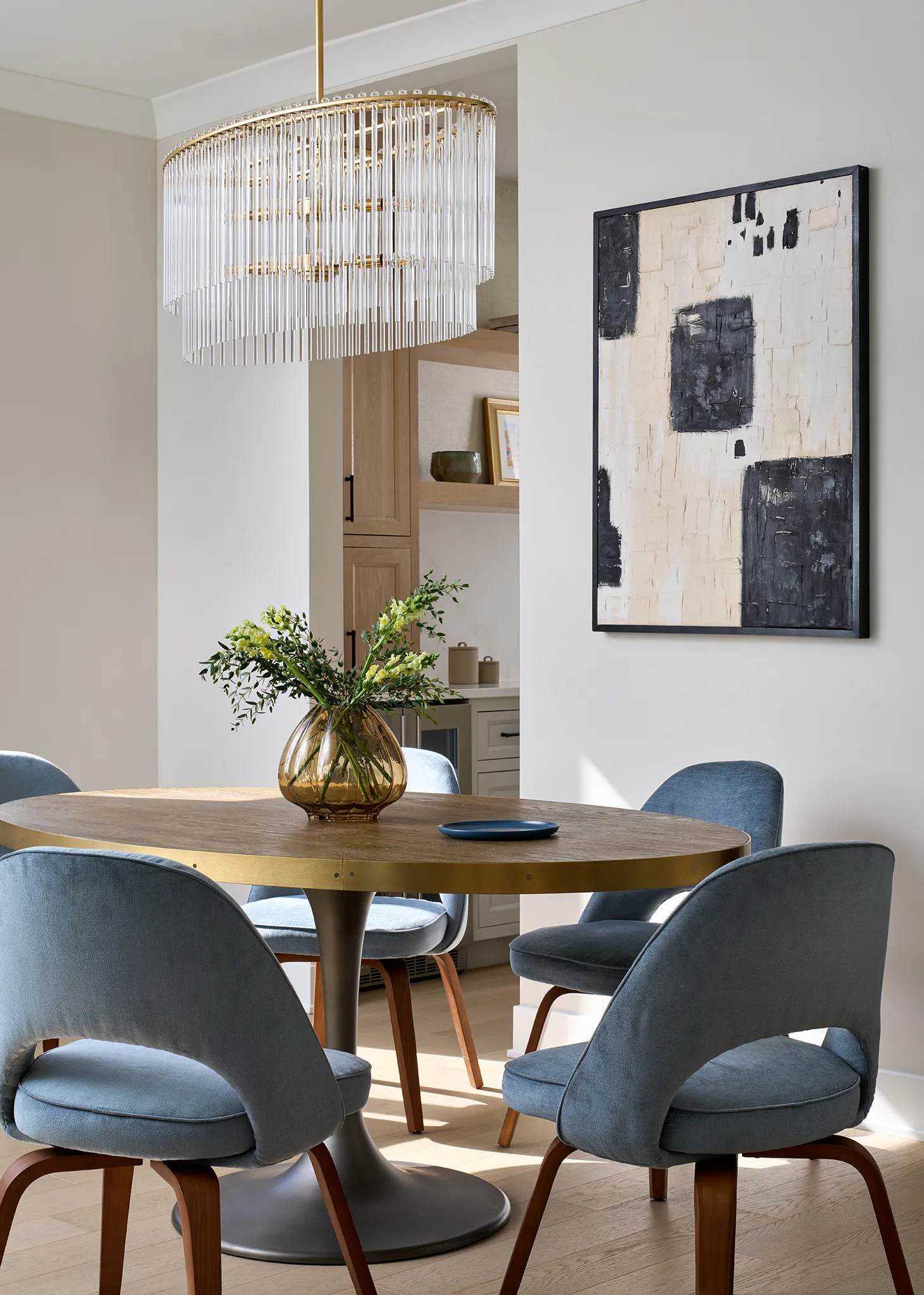
The dining room is positioned as a transition between kitchen and living spaces. A sculptural table anchors the room, paired with upholstered seating that introduces a subtle shift in color.
Overhead lighting adds vertical emphasis while maintaining a clean profile. The room is intentionally restrained, allowing it to feel connected to adjacent spaces without competing visually.
Living Room Design
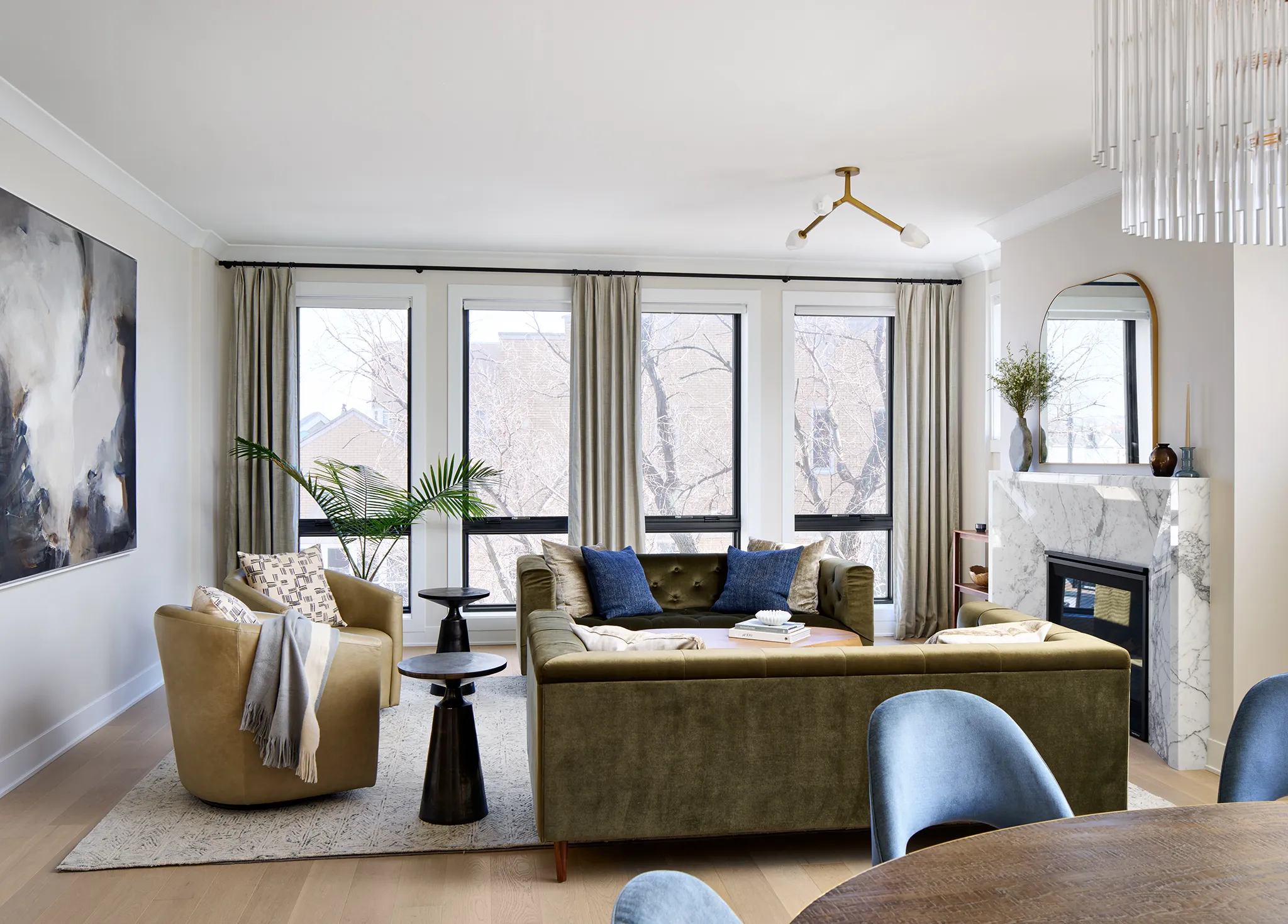
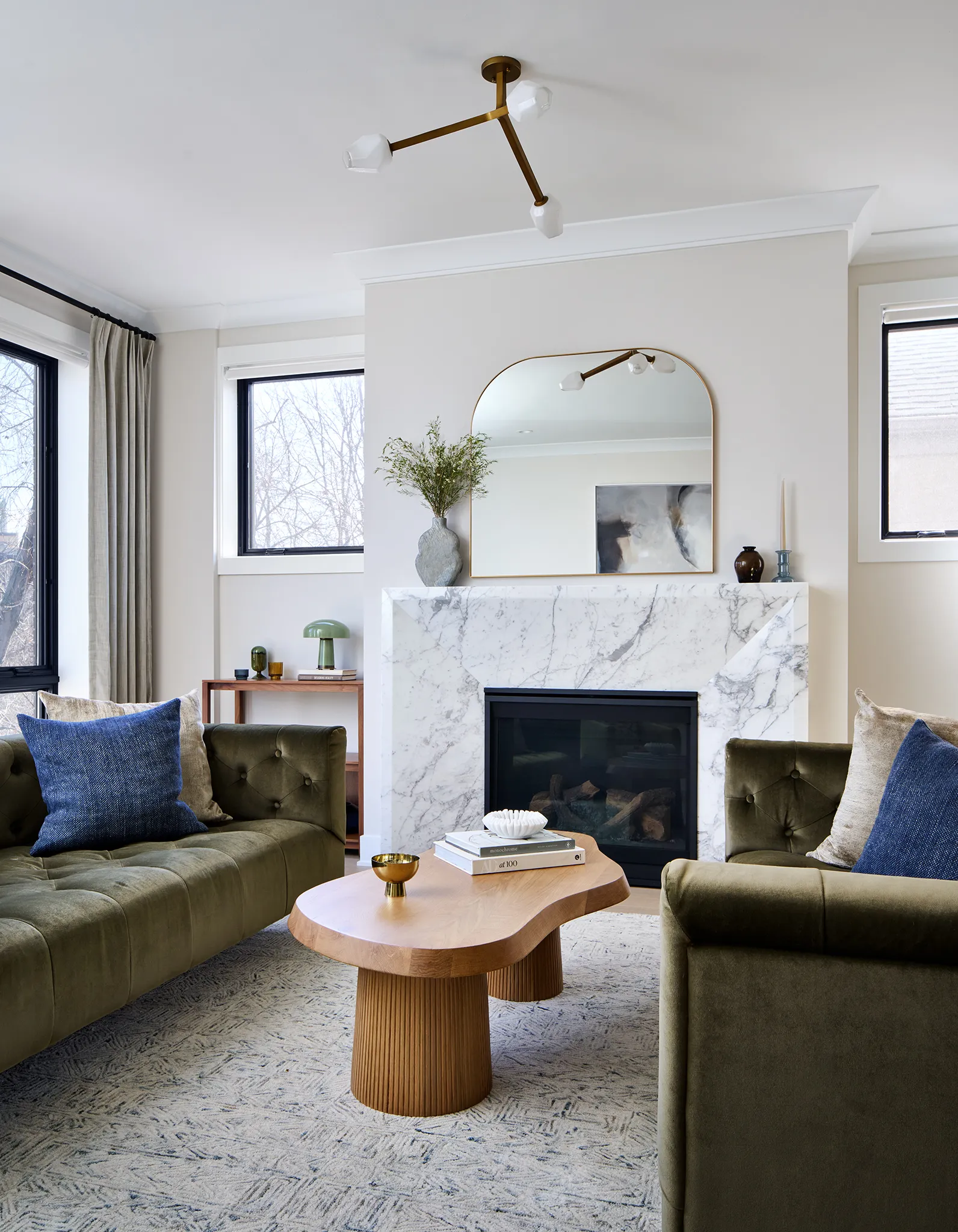
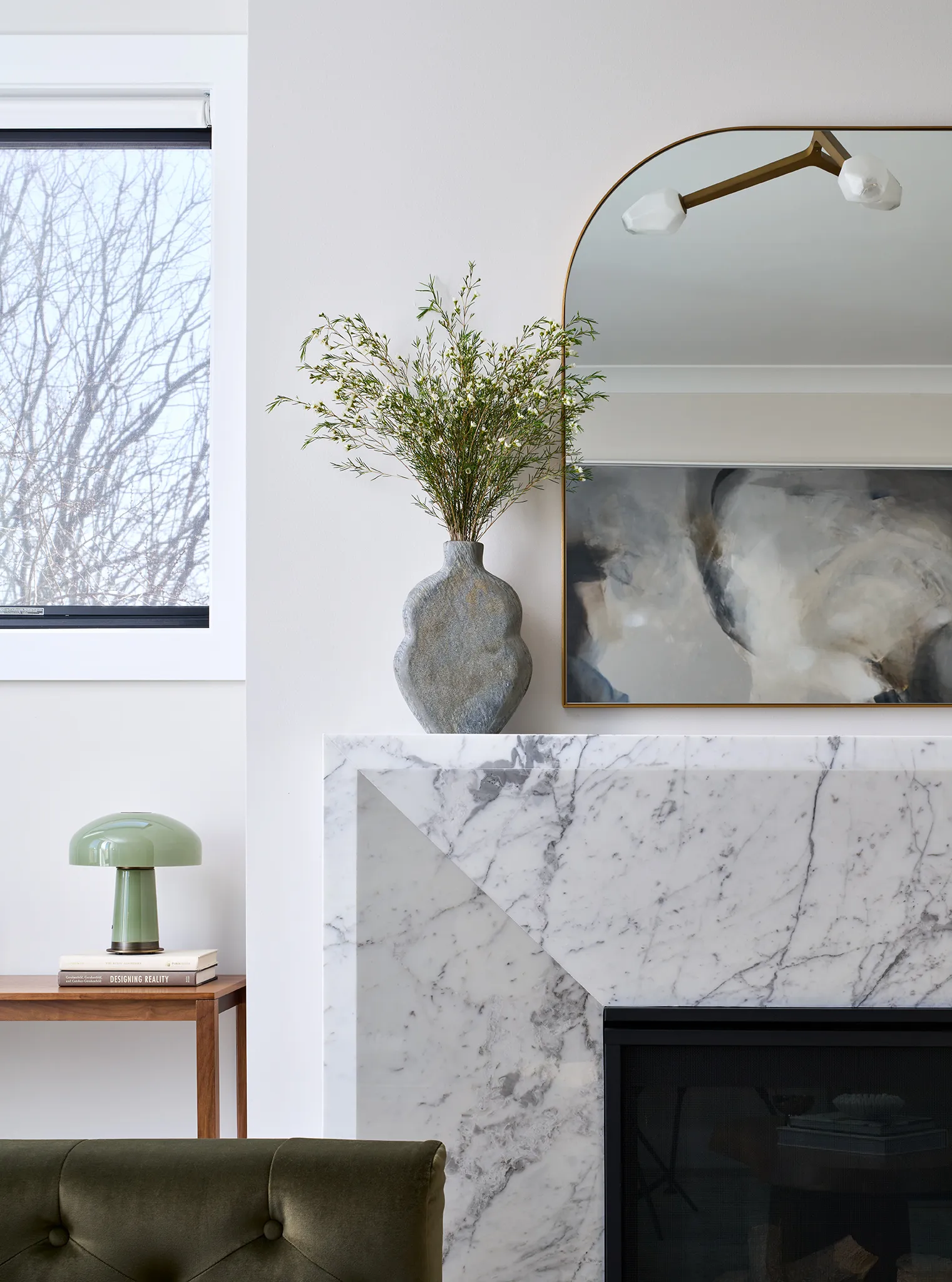
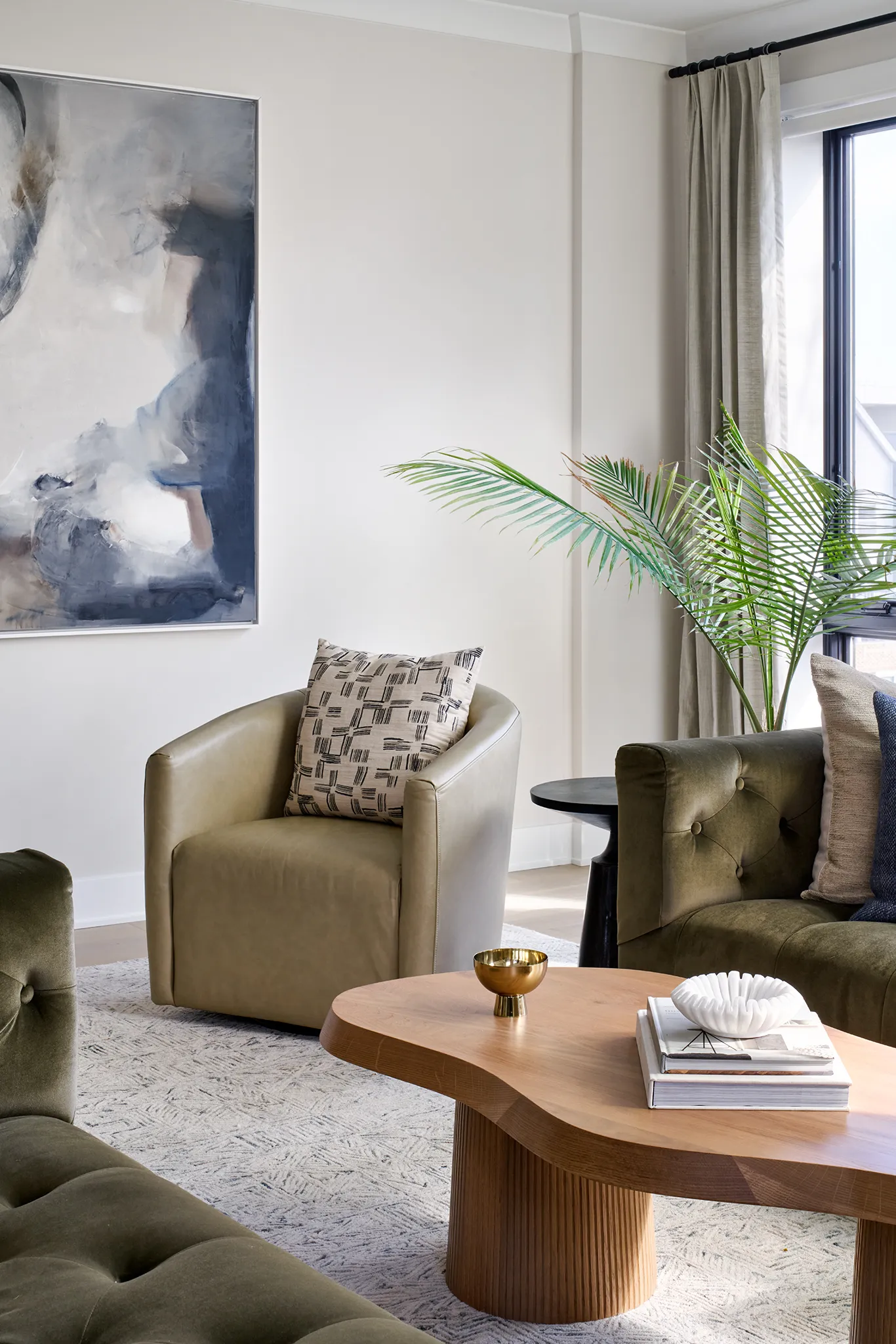
The main living room centers on a large-scale stone fireplace that defines the space. Its veining introduces movement and contrast.
Seating combines upholstered pieces and leather accents, creating variation in both texture and tone. A wood coffee table adds warmth and shape, while side tables and accessories introduce darker accents.
Layered textiles—area rugs, pillows, and drapery—soften the room and as an added bonus, improve acoustics while reinforcing the overall palette.
Family Room
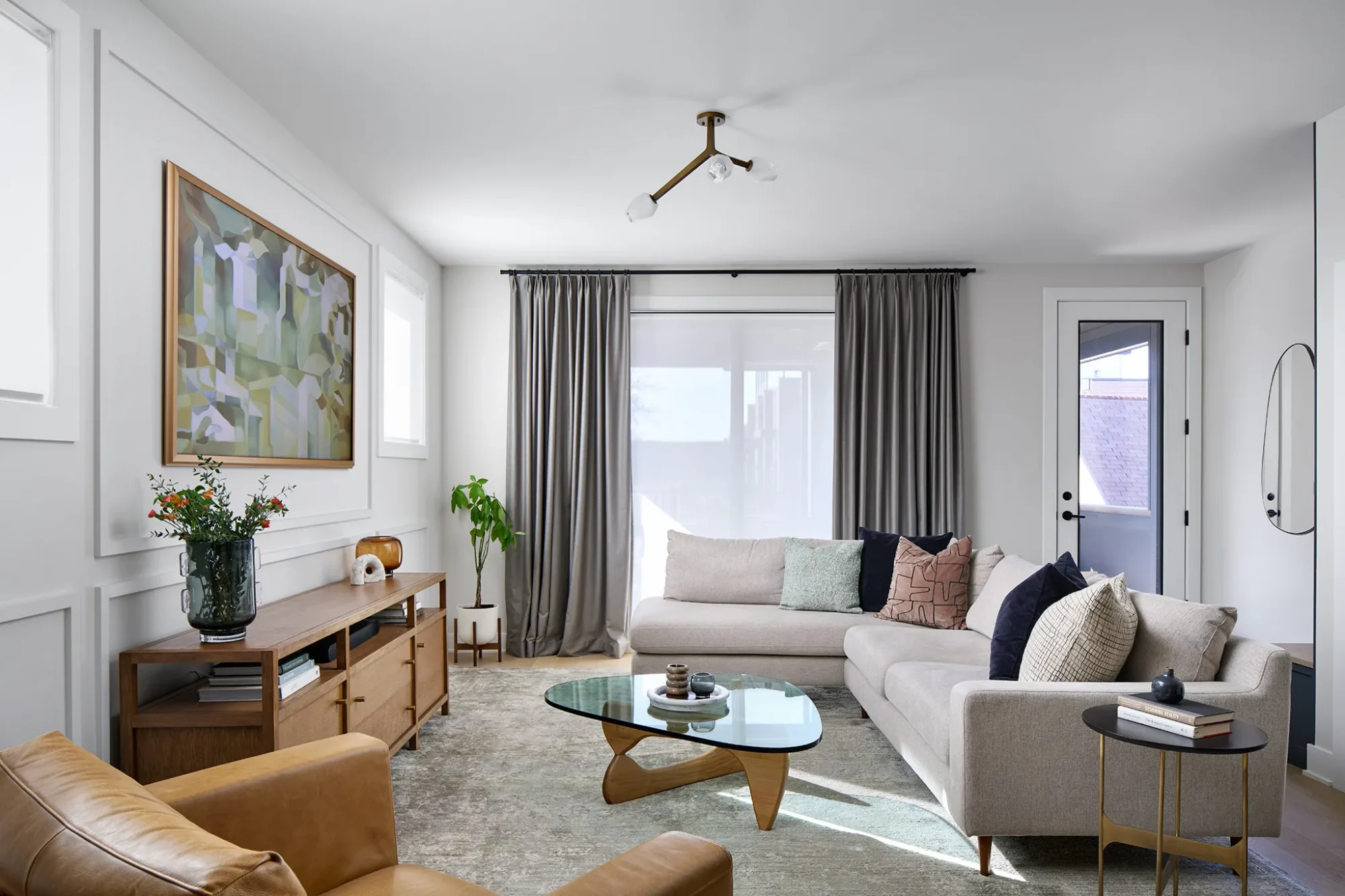
The family room is designed for daily use, prioritizing comfort and durability. A large sectional provides flexible seating, supported by additional lounge seating and a substantial area rug.
Storage and media elements are integrated to maintain a clean visual line, while smaller additions—accent tables, shelving, and layered textiles—complete the space.
Window treatments are scaled appropriately to the room, adding softness and improving light control without drawing unnecessary attention.
Primary Bedroom
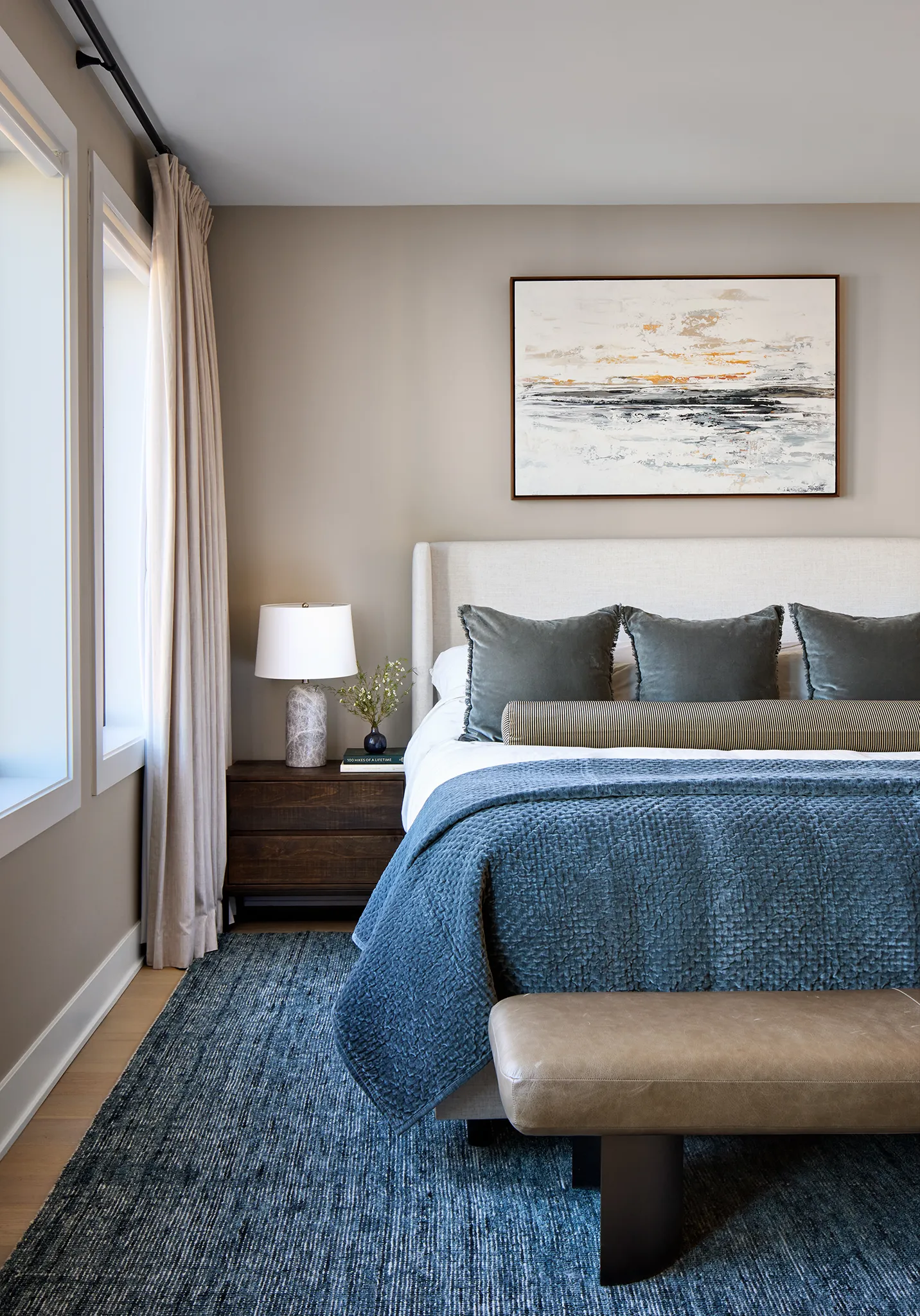
The primary bedroom is quieter in tone, with a focus on comfort and restraint. Upholstered furnishings, layered bedding, and soft color transitions create a more restful environment.
Window treatments are fully customized and feature a blackout backing to keep the room dark in the morning sun.
Accent seating, rugs, and lighting complete the room.
Secondary Bedroom / Guest Space
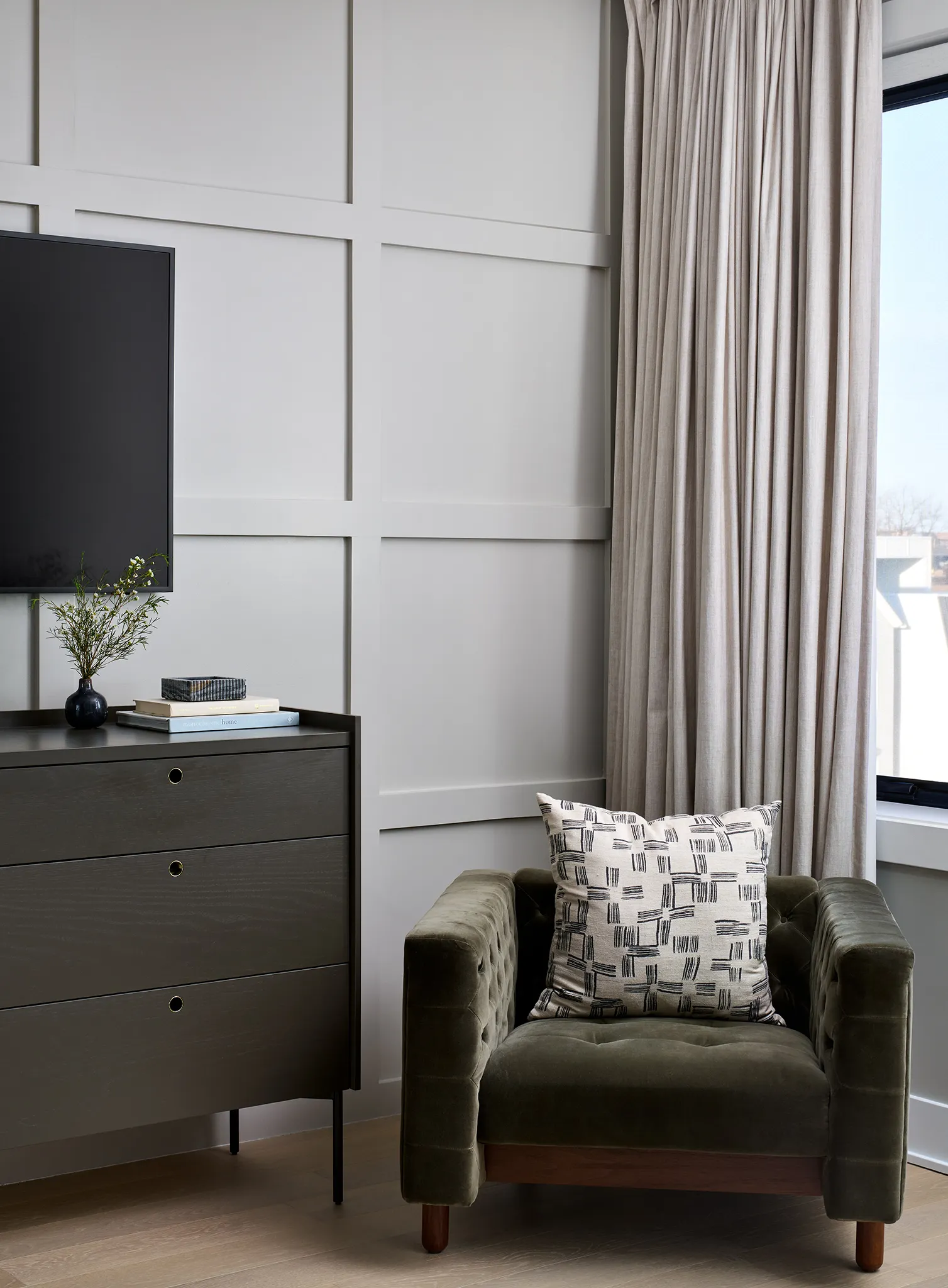
The secondary bedroom follows a similar approach, with slight variation in color and material to give it its own character. Warm wood, neutral textiles, and tailored furniture maintain consistency with the rest of the home.
Additional elements such as rugs, storage pieces, and window treatments ensure the space functions well while remaining visually aligned with the overall design.
Powder Room
The powder room design introduces a stronger visual contrast within the home. A patterned wall treatment wraps the space, creating depth and pattern.
Darker surfaces at the vanity and mirror provide contrast, while lighting and accessories reinforce the layered material palette. Like with many of the powder bathroom remodels we do, the smaller footprint allows for bold wallpaper choices.
Furnishings, Window Treatments & Styling
This project included a full furnishing and styling scope across the home. Lugbill Designs managed selection, procurement, and installation of all furniture, rugs, lighting, mirrors, artwork, and accessories.
Window treatments were designed for each space individually, with variations in fabric, scale, and function depending on the room. Living areas emphasize softness and light to pass through, while bedrooms incorporate blackout capability.
All materials and furnishings were ordered, tracked, received, and coordinated for installation to ensure alignment with the construction schedule and overall design intent.
How the Project Came Together
The project was executed through a combined design and project management approach. This included coordination with contractors, ongoing communication with the client, site visits during construction, and regular updates throughout the process.
Material selections, ordering, and logistics were handled alongside design development, allowing decisions to be implemented without disconnect between planning and execution.
This structure reduces delays, limits misalignment, and ensures that the final result reflects the original design intent.
Key Features
- Full-home renovation with integrated design and project management
- Inset kitchen cabinetry with contrasting island and waterfall countertop
- Butler’s pantry with mixed materials and added storage
- Stone fireplace surround as a primary focal point
- Layered furnishing package across all living spaces
- Custom window treatments throughout the home
- Dedicated styling plan including rugs, artwork, and accessories
- High-contrast powder room with patterned wall treatment
FAQ
Common Questions About Full Home Renovation Projects Like This
What was included in this renovation?
How are furnishings handled?
What types of projects do you take on?
Do you manage both design and construction coordination?
Are window treatments included?
Design, Build, & Furnishings in Lakeview and Beyond
A full home renovation requires more than good design—it requires coordination, clarity, and follow-through at every stage. We bring design, planning, and construction together under one team, managing the details so you don’t have to.
If you’re considering a renovation in Lakeview or elsewhere in Chicago, the first step is a conversation—where we understand your space, your priorities, and what success looks like for you.